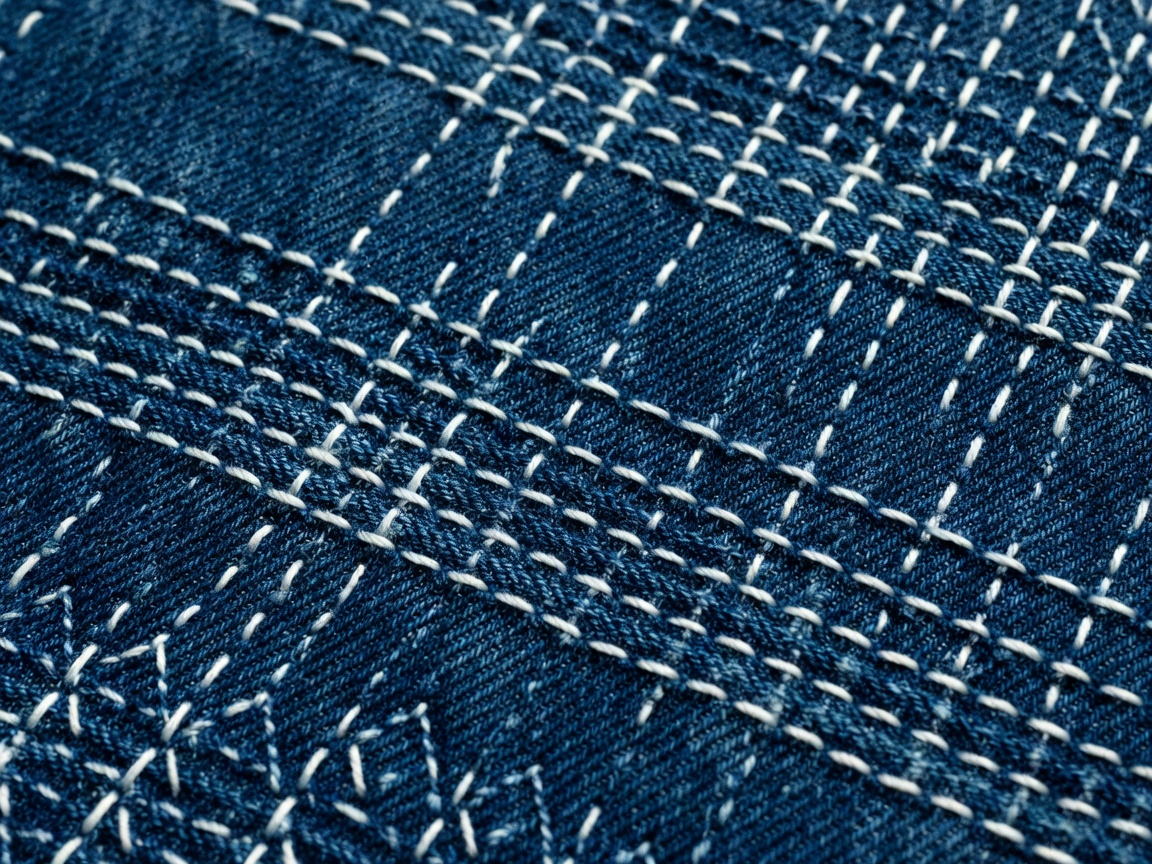
While Tokyo’s Shibuya and Harajuku districts dictated the cultural attitude of streetwear, the physical substance and textile integrity were forged 700 kilometers southwest in Kojima, Okayama Prefecture. Kojima—often venerated as the denim capital of the world—represents an obsession with slow manufacturing, vintage Toyoda shuttle looms, and centuries-old hand-stitching techniques.
1. The Sacred Craft of Boro and Sashiko
The term Boro (literally "tattered" or "ragged") traces back to Edo-period Japan. In northern regions where cotton was scarce and winters harsh, rural families mended worn garments with indigo-dyed scrap fabric, using running stitches called Sashiko (piercing needlework) for structural reinforcement.
Instead of concealing the repair, Sashiko celebrates the stitch with contrasting white thread against deep natural indigo cloth. This embodies the foundational Japanese aesthetic of Wabi-Sabi—finding sublime beauty in imperfection, aging, and natural wear.
Denim Origin
Kojima, Okayama Prefecture, Japan
Traditional Method
Hank-dyed natural indigo (Aizome) & low-tension shuttle weaving
Landmark Garment
Kapital Century Denim No. 123 (Kakishibu & Indigo Sashiko Grid)
2. Kapital’s Reinvention of Heritage Workwear
Founded by Toshikiyo Hirata and elevated by his son Kiro Hirata, Kapital transformed traditional Japanese folk textiles into globally revered avant-garde streetwear. Kapital's flagship achievement, Century Denim, blends custom-developed persimmon tannin (Kakishibu) with natural indigo yarns, woven with a full-surface Sashiko structural grid that patinas with astonishing complexity over years of wear.
Unlike sterile fast fashion, every Kapital piece behaves as a living garment. As indigo sloughs off high-friction areas (the knees, elbows, and seams), the underlying white or tannin-treated threads emerge, documenting the owner’s individual lifestyle.
3. Toyoda Vintage Shuttle Looms & Selvedge ID
Standard modern commercial looms weave at breakneck speeds, producing perfectly uniform but flat denim. Kojima artisans rely on restored vintage 1950s Toyoda G9 automatic shuttle looms. These low-tension machines rattle slowly, causing intentional micro-variations and slub texture in the cotton yarn. The resulting fabric is heavy (often 14oz to 21oz), breathable, and bound by a tightly sealed selvedge edge that prevents fraying.
4. How to Integrate Boro & Kojima Denim into Modern Styling
Pairing heavy textural boro jackets with minimalist matte-black trousers creates an intentional tension between antique Japanese craftsmanship and sharp metropolitan style. For footwear, raw Kojima selvedge pairs naturally with sturdy Goodyear-welted leather boots or low-profile canvas sneakers.